
Quick answer: a government official, court or regulator asking you by text, call or email to buy gift cards and send the card numbers, PINs or photographs is a scam signal, even when the message uses a real official’s name. Stop the conversation, do not expose the code, and verify the agency through contact details you find independently on its official website.
That warning became fresh news on August 3, 2026, when the State of Hawaiʻi published News Release 2026-49. The release said a scammer used text messages to impersonate Attorney General Anne Lopez, told the recipient to purchase gift cards, and requested photographs of the cards and redemption codes. The reported victim worked with a financial institution and recovered the funds, but the release does not promise that every victim can recover money.
The incident happened in the United States and does not make Hawaiʻi law applicable to an ordinary Nigerian gift card transaction. Its practical lesson travels well: a real name, public office or official-looking caller ID does not authenticate a payment request.
What the Hawaiʻi warning actually says
The official release describes four connected steps: impersonation, urgency, gift card purchase, and delivery of card information through an unofficial channel. It says no state official will ask a person to purchase gift cards, provide gift card numbers or redemption codes, or send money through text messages, email or other unofficial communications.
The same release advises people not to reply directly to a suspicious message. Instead, they should locate a trusted phone number or official contact independently. That separation matters. Calling the number inside the message only returns you to the person who sent it.
| Signal in the request | Why it is unsafe | Independent check |
|---|---|---|
| A real official’s name or job title | Names, titles and public biographies can be copied from official websites. | Find the agency’s domain yourself and call its published switchboard. |
| Threat, deadline or secrecy | Pressure reduces the chance that the recipient will verify the story. | Pause the transaction and discuss it with a trusted person. |
| Instruction to buy gift cards | Gift cards are a retail product, not an official channel for fines, taxes or case fees. | Ask the agency through its official contact how a real obligation would be documented. |
| Request for a card photo, number or PIN | The code may be enough to redeem value even while the physical card remains with you. | Do not send it. Contact the card issuer through the support details on its official site. |
Why the card photograph is the payment
A photograph of the back of a gift card is not harmless proof. If it reveals the card number, PIN or redemption code, it can transfer control of the stored value to another person. The U.S. Federal Trade Commission’s gift card guidance says scammers commonly create urgency, specify which card to buy and then ask for the number and PIN. It tells consumers not to give those numbers or send a card photograph.
For Nigerian sellers, the same distinction applies when receiving a card for resale. A cropped image that hides the redeemable code can help with initial identification, but it does not establish lawful ownership, purchase, activation or the chain of custody. A platform should request only the minimum evidence needed at each step and should not ask a user to expose a live code in public chat, social media comments or an unknown balance checker.
A 60-second verification protocol
- Stop the conversation. Do not buy the requested card, send money, click a link or disclose personal information.
- Do not use the contact details in the message. Do not trust the displayed caller ID, reply address, badge number or signature block.
- Find the agency independently. Type the official domain yourself or use a trusted government directory. For U.S. state agencies, confirm the relevant government domain; for Nigerian public bodies, look for the agency’s verified
.gov.ngsite. - Call the published office. Ask whether the named official or department sent the request. Do not let the original caller transfer you to a supposed supervisor.
- Apply the payment test. If the request requires gift cards, PINs, card photographs, cryptocurrency or an urgent transfer to solve an official problem, do not proceed.
- Preserve evidence safely. Keep the sender number, email headers, timestamps, message screenshots and receipt, but redact any unredeemed code before sharing evidence outside the issuer or an authorized investigator.
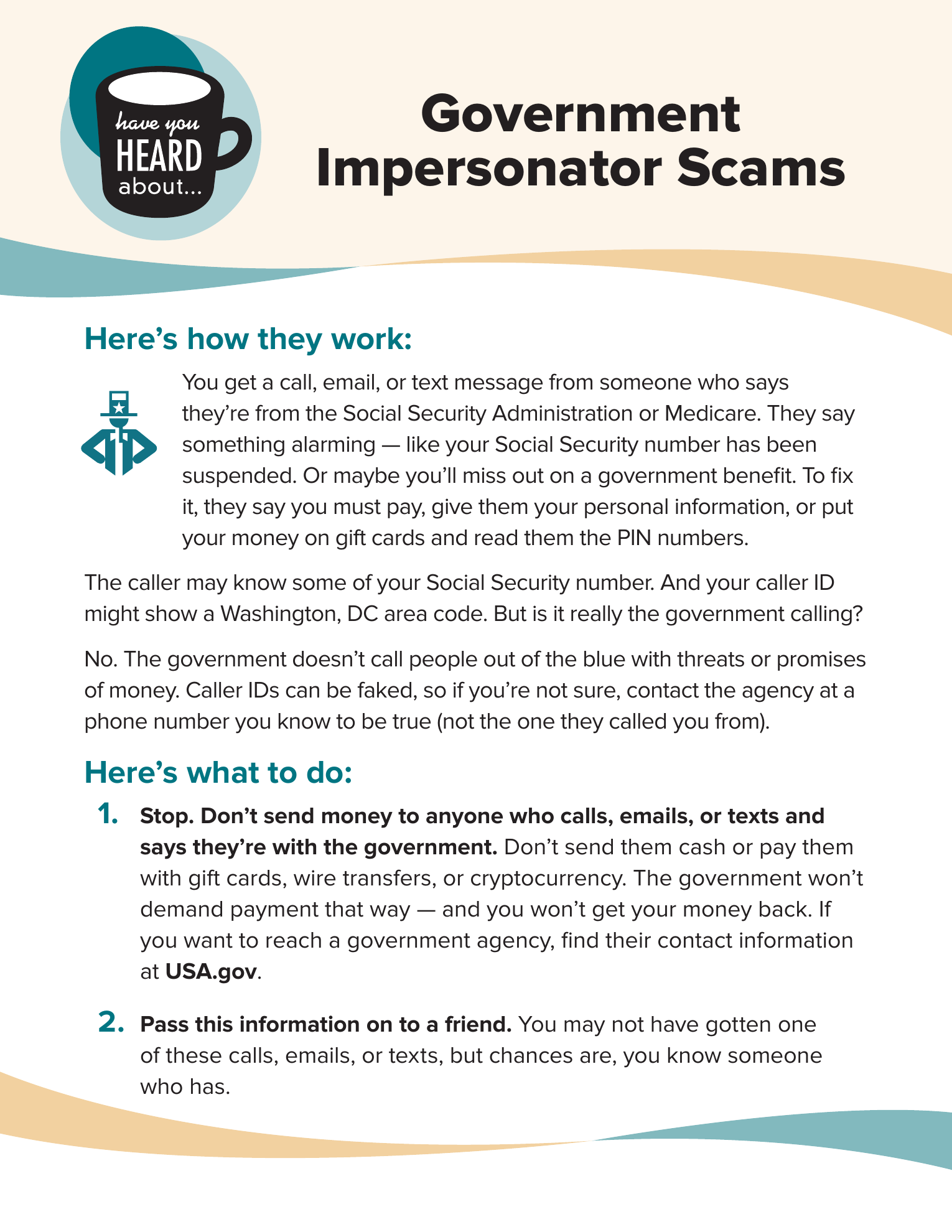
Caller ID and official-looking messages are not identity checks
The FTC’s government impersonation guidance warns that caller ID can be faked. It also notes that scammers may use an employee number, a real agency name or information about the recipient to sound credible. Those details can make a message look informed without proving who controls the phone or email account.
A screenshot of a government website is equally weak evidence. It proves only that a page exists. Authentication requires an independent path back to the agency: its official domain, published switchboard, case portal or written process. Do not verify a caller by asking the caller to verify themselves.
What to do if you already sent a code or card photo
- Contact the card issuer immediately. Use the issuer’s official website or the support information printed on the card or receipt. Report fraud and ask whether remaining value can be frozen or recovered. A request is worth making, but recovery is not guaranteed.
- Keep the original card and purchase record. Save the receipt, packaging, activation record, messages, sender details and timestamps. Do not edit the originals.
- Contact the payment provider. If a bank card, transfer or wallet funded the purchase, report the fraud promptly through the provider’s official channel.
- Report the incident. A Nigeria-based victim can use the Nigeria Police Force National Cybercrime Centre e-reporting portal. A U.S.-connected incident can also be reported at ReportFraud.ftc.gov and to the agency being impersonated.
- Reject recovery-payment demands. Do not pay a stranger who claims they can recover the card if you first send another card, fee or code.
For a broader transaction workflow, see our nine checks before sharing a gift card code. The central rule is the same: protect the redeemable credential until the counterparty and process are verified.
A risk screen for Nigerian gift card sellers
A seller may receive a card from a legitimate buyer, a compromised account, a scam victim or an intermediary who cannot explain the card’s origin. The following screen is not a guarantee and does not determine criminal liability. It is a practical way to identify questions that require more evidence.
| Question | Useful evidence | Reason to pause |
|---|---|---|
| Who bought the card? | Buyer identity, relationship to the seller and a consistent source explanation | The seller only received a code from an unknown contact |
| How was it purchased? | Complete receipt, order email or retailer record kept privately | A cropped screenshot omits retailer, date or transaction context |
| Was it activated? | Activation line on a receipt or confirmation from the issuer | The card is described as “new” but activation cannot be explained |
| Who handled the code? | A short, coherent chain of custody | Several intermediaries forwarded the same image or code |
| Why is it being sold? | A normal gift, refund or personal sale explanation | The story involves a government fine, emergency official or secret reimbursement |
Receipts are useful but are not magic. A receipt image can be cropped, reused or separated from the card it originally documented. Our guide to why purchase evidence affects gift card acceptance explains why the whole record matters more than one screenshot.
The wider policy context
The Hawaiʻi incident is one case, not a measure of how often this exact message is sent. However, it sits inside a large impersonation problem. In June 2026, the FTC reported 2025 U.S. complaint data showing more than one million imposter-scam reports and about $3.5 billion in reported losses across all imposter categories. The FTC attributed about $920 million of reported losses to government imposters.
Those are reported U.S. figures, not a global loss estimate and not Nigerian gift card market data. They should not be converted into a claim about local prevalence. Their relevance is narrower: copying trusted identities is a major fraud method, and gift cards are one of several payment routes scammers may demand.
A separate U.S. Department of Justice warning updated August 3, 2026 says courts do not instruct people to purchase gift cards, use cryptocurrency or transmit funds to avoid arrest or jury-service penalties. Different agencies and stories can change, but the independent-verification rule stays consistent.
Frequently asked questions
Does a message using a real official’s name prove it is genuine?
No. Names, titles, photographs and public schedules can be copied. Verify the sender through a separate official channel that you locate yourself.
Can a government agency ever accept a gift card as payment?
The Hawaiʻi and FTC warnings are direct: an official demand to buy gift cards and send numbers, PINs or photographs is a scam signal. Use the agency’s published payment instructions for any real obligation.
Can the issuer always recover a gift card after the code is shared?
No. The Hawaiʻi release says the reported victim recovered funds with help from a financial institution, but it does not establish a universal refund right. Contact the issuer immediately and ask, while preserving the card and receipt.
Should a Nigerian victim report a U.S. government impersonation attempt?
Yes. Report locally through the NPF National Cybercrime Centre, notify the impersonated agency through its official site, and use the FTC reporting portal for a U.S.-connected scam. Keep any live card code private except when an authenticated issuer or investigator specifically requires it.
Sources and editorial note
News context reviewed August 20, 2026. This article summarizes official U.S. and Nigerian public guidance and applies it to gift card verification. It is not legal advice, does not accuse any unnamed sender of a crime, does not promise recovery, and does not set or predict Nigerian gift card rates.
- State of Hawaiʻi: News Release 2026-49
- FTC: How to avoid a government impersonation scam
- FTC: Avoiding and reporting gift card scams
- FTC: Government Impersonator Scams PDF
- FTC: 2025 imposter-scam report and loss data
- U.S. Department of Justice: jury-duty imposter warning
- Nigeria Police Force National Cybercrime Centre e-reporting portal