Data note: The fixed comparison below uses CBN and GiftCardsRate observations from July 24 and July 28, 2026. The live Apple estimate is refreshed from our rate table, so its date may be newer.
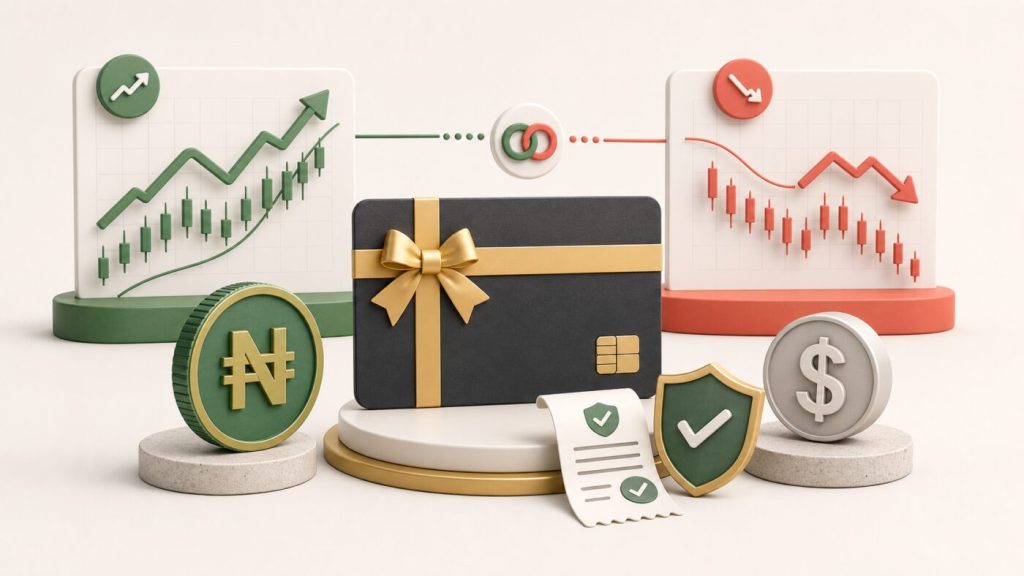
Naira FX and gift card rates in Nigeria do not move as one price. The dollar can rise while a buyer cuts an Apple, Steam or Amazon quote. That is not automatically a mistake. The two markets price different things.
The CBN rate tells you what one US dollar was worth in Nigeria’s official foreign-exchange market. A gift card buyer is pricing store credit that must still pass country, format and verification checks. Put simply: a $100 gift card is not the same as $100 cash.
This distinction matters when a headline says a weaker naira is pushing Nigerians toward gift card trading. FX news gives useful context, but it cannot tell a seller the final payout for a particular card.
Why the CBN dollar rate is not your gift card rate
NFEM is the official market benchmark published by the Central Bank of Nigeria’s exchange-rate table. In everyday language, it is a reference for the official naira value of currencies such as the US dollar.
The parallel-market rate is different. It reflects cash-dollar trading outside that official benchmark. Sellers may hear both figures in Lagos or Abuja, but neither one is a ready-made Apple gift card rate.
A buyer still has to ask practical questions. Is the card issued in the US? Is it physical or an e-code? Is there a receipt? Is demand for that brand strong today? Has the buyer already taken more Apple cards than it can resell quickly?
Those checks create a discount between the card’s face value and the naira offer. They also explain why two buyers can quote different amounts within minutes, even while looking at the same dollar market.
What the July 2026 numbers actually show
We matched the dates instead of comparing a new FX figure with an older gift card observation. The CBN column is the NFEM weighted average. The Apple column is GiftCardsRate’s tracked rate for a USA physical Apple gift card.
| Date | CBN NFEM rate | Apple card rate | $100 estimate |
|---|---|---|---|
| July 24 | ₦1,362.0866/US$ | ₦1,087.74 per card dollar | ₦108,774 |
| July 28 | ₦1,365.5303/US$ | ₦1,083.05 per card dollar | ₦108,305 |
| Change | +0.25% | -0.43% | -₦469 |
The move was small, but the direction is the useful part. From July 24 to July 28, the official dollar rate edged up while the tracked Apple rate edged down. That is enough to reject a simple rule such as “dollar up means every gift card quote goes up.” It is not enough to claim a long-term correlation from only two dates.
Latest tracked $100 USA physical Apple estimate:
Apple · United States · USD 100
One-card estimates by condition. Select the matching tier before using an estimate.
| Card form / all conditions | NGN estimate | Calculator |
|---|---|---|
| E-codeAccepts Multiples of 5 · E-codes · Fast card | ₦102,005.00 | Calculate → |
| Physical · HorizontalAccepts Multiples of 50 · Clear Picture Required · Fast card · Horizontal Cards Only · Physical · Single Card Only | ₦113,186.00 | Calculate → |
| Physical · VerticalAccepts Multiples of 50 · Clear Picture Required · Fast card · Physical · Vertical Cards Only | ₦98,081.00 | Calculate → |
Check the date shown in the box before using it. It is a market reference, not a promise that every buyer will pay the same amount.
Our July 29 tables also show why “the gift card rate” is too broad a phrase. Four US cards carried four different reference values on the same day:
| Card | Rate per USD 1 | $100 estimate |
|---|---|---|
| Apple physical | ₦1,087.34 | ₦108,734 |
| Steam | ₦1,057.55 | ₦105,755 |
| Amazon | ₦993.19 | ₦99,319 |
| Google Play | ₦922.45 | ₦92,245 |
The spread between Apple and Google Play was ₦164.89 per card dollar, or ₦16,489 on a $100 card. USD/NGN was identical for all four rows. Brand demand and buyer appetite created the difference.
What can move a buyer’s quote more than FX
There is no single “Nigeria gift card rate” that covers every card. In practice, these details often matter more than a small daily move in USD/NGN:
- Brand demand: Apple can be busy while Google Play is slow, or the other way around. A buyer with too much stock may reduce one brand without changing the rest.
- Country and currency: A US Apple card and a UK Apple card are separate products with different redemption rules. See our guide to country and region differences.
- Physical card or e-code: The format changes how a buyer checks ownership and fraud risk. Our physical versus e-code comparison explains where the gap can come from.
- Receipt and card condition: Clear proof can make a card easier to verify. It does not force a buyer to accept it or guarantee the highest quote.
- Amount: A $500 card may carry more exposure for a buyer than five $100 cards. Large denominations can therefore use a different rate tier.
- Final deductions: A high advertised rate means little if the platform later applies a fee, adjusts the card value or sets a costly withdrawal rule.
Apple’s own US gift card terms also make the cash comparison imperfect. US cards are tied to eligible US purchases and are not cash deposits. A third-party buyer’s offer is not an Apple-backed dollar value.
What a seller in Lagos or Abuja may see
Imagine two people holding the same $100 US Apple card. One asks an online platform for a quote in the morning. The other visits a local buyer later that day. Their offers can differ even if USD/NGN barely moves.
The online platform may have a stronger resale channel but stricter proof checks. The local buyer may pay quickly but build a wider risk margin into the quote. Or one buyer may simply have enough Apple inventory for the day.
This is an example of how the market works, not a claim about every Lagos or Abuja trader. The useful comparison is the final amount you can withdraw, measured at roughly the same time and using the same card details.
How to check a quote before you sell
- Describe the card correctly. Give the brand, issuing country, currency, amount, physical/e-code format and receipt status. Do not expose the full code while asking for a quote.
- Check a card-specific benchmark. Use our US Apple rate page or the relevant brand page, not the CBN dollar rate alone.
- Ask for the final naira payout. Confirm fees, possible adjustments, rejection rules and withdrawal conditions before submitting the card.
- Keep evidence. Save the quote, receipt and platform terms. The FCCPC consumer-rights guidance stresses clear information and price disclosure.
If someone asks you to buy a gift card as payment for a debt, prize, government fee or urgent online request, stop. That is different from selling an unwanted card. The FTC’s gift card scam guidance treats demands for a card number and PIN as a major warning sign.
Common questions about Naira FX and gift card rates
Why is an Apple gift card rate lower than the CBN dollar rate?
The CBN rate values dollars in the official FX market. A buyer values restricted Apple store credit and also prices verification, resale demand, operating costs and fraud risk. The difference is not automatically one hidden fee.
If the naira weakens, will my gift card payout rise?
Not automatically. A weaker naira may support higher naira quotes, but weak demand or excess buyer inventory can offset that move. Check a fresh quote for the exact brand and card type.
Does the parallel-market dollar rate matter?
It can influence buyer expectations and operating costs, so it may matter as context. It still cannot predict the payout by itself.
How do I estimate the naira value of my card?
Multiply the card amount by a current, card-specific rate. For example, a $100 card at ₦1,087 per card dollar gives an estimate of ₦108,700. Then confirm whether the buyer applies any fee or adjustment.
What the TradeCard report proves, and what it does not
A July 24 article from Independent Newspaper Nigeria reported that Nigerians were converting gift cards to naira through TradeCard. That supports a narrow point: services exist for people who want liquidity from unwanted cards.
It does not prove that gift card payouts follow the CBN or parallel-market dollar rate tick for tick. The article did not publish a rate-correlation method, and an app listing cannot verify payout speed or transaction safety.

The Nigerian App Store listing displays TradeCard ltd as the developer name and CARSON TECHNOLOGY SDN. BHD. as the provider. Readers should still review a platform’s identity, support channel, dispute process and withdrawal terms before sending a card.
Disclosure: GiftCardsRate has no commercial relationship with TradeCard or Independent Newspaper Nigeria. The sources are referenced for verification and analysis only.
Takeaway: watch FX news, but price the card you actually hold. Brand, country, format, proof, amount and buyer demand decide the usable quote. The dollar rate is background, not a payout formula.